
Is There a Part of You That You Still Don’t Know?
Most people believe they know who they are.
We know our name, our profession, our preferences, and our personal story. We have beliefs, values, and a fairly clear image of ourselves.
But Carl Gustav Jung believed that this image represents only a small portion of what we truly are.
Behind our conscious personality lies something much larger, deeper, and more difficult to understand.
Jung called this totality the Self.
For many scholars, the Self is the most important concept in all of Jungian psychology.
And perhaps one of the most misunderstood.
What Is the Self?
In Jungian psychology, the Self represents the totality of the personality.
It includes:
- Everything we consciously know about ourselves.
- Everything that remains unconscious.
- Undeveloped potential.
- Inner conflicts.
- Strengths and weaknesses.
In short, the Self is the totality of the psyche.
It is not merely who you think you are.
It is everything that you are.
The Self Is Not the Ego
One of the biggest misunderstandings in Jungian psychology is confusing the Ego with the Self.
Although related, they are not the same thing.
What Is the Ego?
The ego is the center of conscious awareness.
It is the part of the mind responsible for our sense of identity.
When you think:
- “I am a lawyer.”
- “I enjoy music.”
- “I am shy.”
- “I believe this.”
That is the ego speaking.
The ego helps us function in daily life, but it sees only part of the picture.
What Is the Self?
The Self is much larger.
If the ego were a small island, the Self would be the entire ocean surrounding it.
It contains both conscious and unconscious aspects of personality.
For this reason, Jung argued that the ego is not the true center of the psyche.
The Self is.
Why Is the Self So Important?
According to Jung, many psychological problems emerge when the ego mistakenly believes it is the whole personality.
When that happens, important aspects of the psyche are ignored or repressed.
These may include:
- Unrecognized fears.
- Hidden desires.
- Untapped potential.
- Avoided emotions.
These aspects do not disappear.
They continue to influence behavior from the unconscious.
The Self represents the integration of these hidden dimensions.
The Self and Individuation
If there is one concept inseparable from the Self, it is individuation.
Individuation is the process of becoming who we truly are.
But who is that authentic self?
For Jung, the answer is clear:
The Self.
Individuation is the gradual movement toward greater harmony between the ego and the Self.
The closer this relationship becomes, the more complete the personality grows.
How Does the Self Appear?
The Self rarely appears directly.
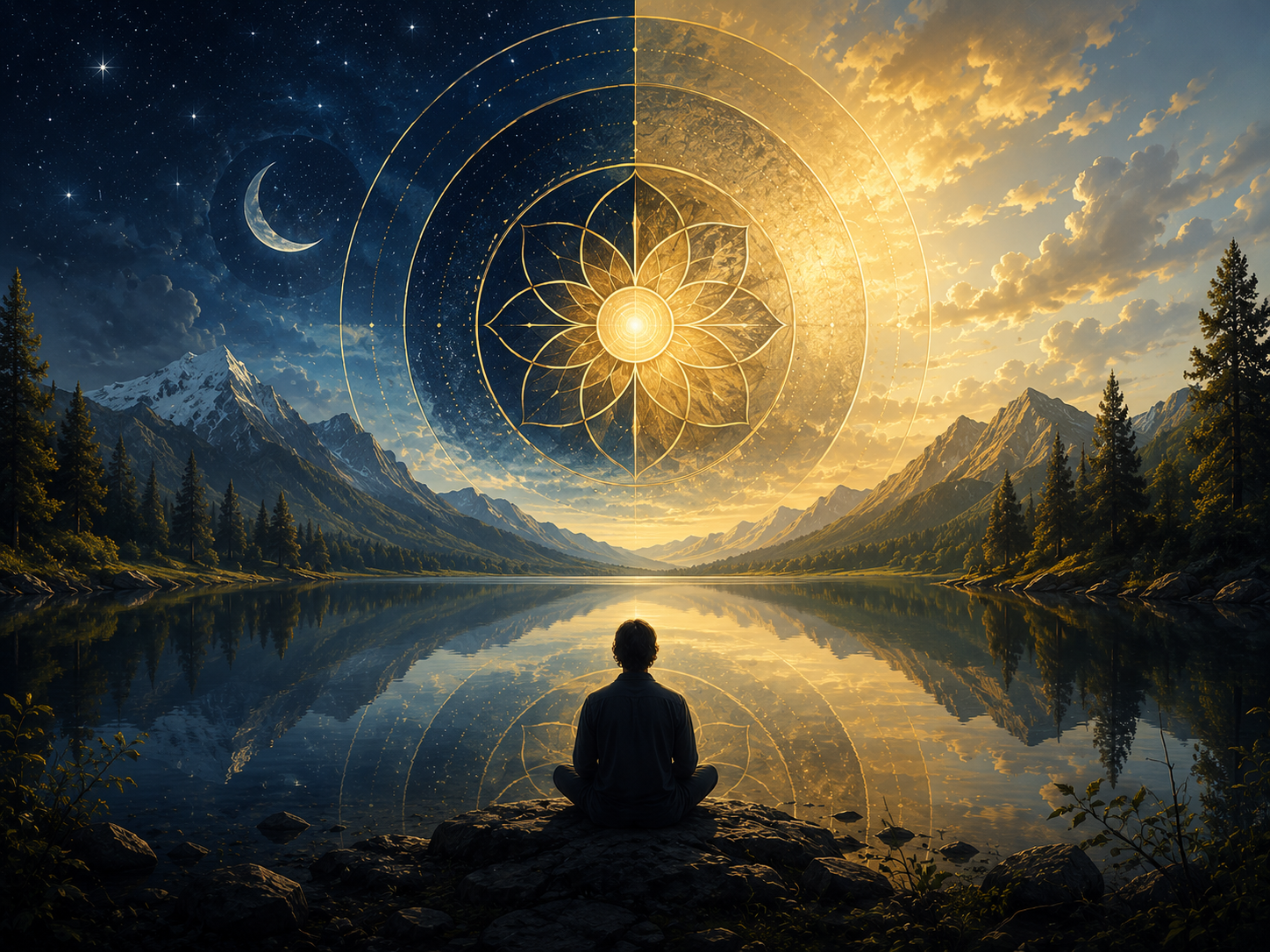
Instead, it often manifests through symbols.
Jung noticed that similar symbolic images appear across dreams, myths, religions, and transformative experiences.
Examples include:
- The wise old man.
- The king.
- The queen.
- The divine child.
- Mandalas.
- Spiritual figures.
These symbols are not the Self itself.
They are representations of its presence.
Is the Self a Potential or a Destination?
Jung viewed the Self as something that already exists from the beginning.
It does not need to be created.
Instead, it needs to be realized.
A useful metaphor is a seed.
The tree already exists within it as potential.
Yet it still requires time, growth, and the right conditions to emerge.
The Self functions in a similar way.
Can Suffering Be Connected to Distance from the Self?
Many Jungian thinkers would answer yes.
When people live solely according to external expectations, suppress important aspects of themselves, or ignore their inner life, they often experience fragmentation.
The distance between who they think they are and who they truly are begins to grow.
This can appear as:
- Anxiety.
- Emptiness.
- Lack of purpose.
- Persistent inner conflict.
For this reason, individuation is not merely self-discovery.
It is self-integration.
What Can the Self Teach Us Today?
Modern society is obsessed with identity.
People often define themselves through careers, social groups, ideologies, or labels.
Jung offers a different perspective.
Perhaps the most important question is not: “How do I want to be seen?”
But: “Who am I becoming?”
The Self reminds us that we are larger than our conscious self-image.
And that one of life’s greatest journeys may be discovering that truth.
Final Thoughts
Among all the concepts developed by Carl Jung, few possess the depth of the Self.
It represents the totality of personality, the union of consciousness and the unconscious, and the fullest potential of the human being.
The ego matters.
But it is not everything.
There is something larger within us that continually seeks growth, integration, and realization.
Jung called it the Self.
And perhaps one of the most important tasks of life is learning to listen to it.
Leave a Reply